


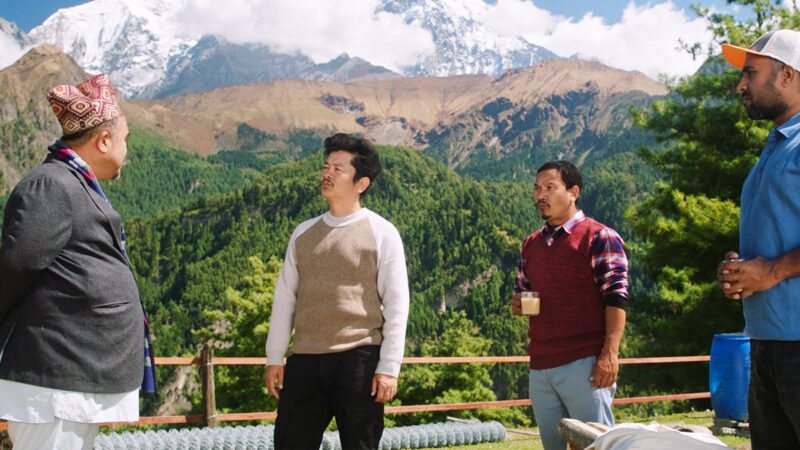
You could call it the Kabaddi Universe. The vibrant world of Thak Khola, once described through the poetry of Bhupi Sherchan, is now being carried forward by director Rambabu Gurung through the language of cinema.
It has been 12 years since Gurung began telling stories about Thakali life and regional identity in Thak Khola, along the Kali Gandaki River. The franchise has played a wider role in connecting the commercial legacy of Nepali cinema with the characters it has created and the representation of communities in Nepali films.
The popularity of Kabaddi can be explained through seven elements. First, its characterisation presents incomplete human beings before conventional heroes. Second, the supporting characters and the village itself become central to the story. Third, its visual aesthetics extend beyond the landscapes of Mustang to the visual language of everyday life. Fourth, its storytelling focuses on small human conflicts rather than grand events. Fifth, its humour emerges not only from dialogue but also from character behaviour. Sixth, it makes distinctive use of local culture and language. And seventh, the franchise has the ability to bring audiences back into the same fictional world.
The seventh element is particularly relevant here: the Kabaddi Universe, a story world audiences have watched and experienced over the past decade.
There are no grand, larger-than-life issues at its centre. Instead, the films focus on ordinary incidents that touch human lives. That approach continues in the fifth installment.
Returning to the world of Kabaddi
Let us enter the fifth chapter, ‘Kabaddi 5’, also referred to as ‘After the Final Match’.
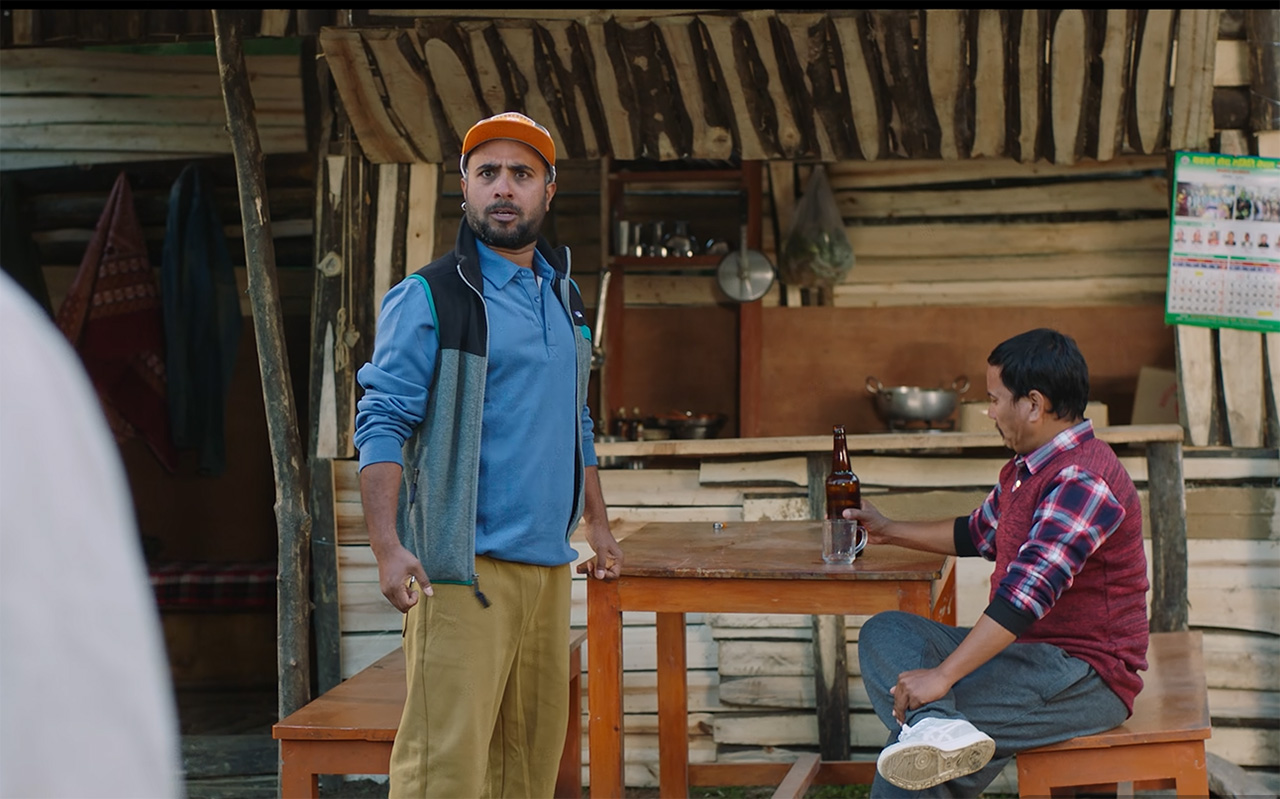
We have watched the previous four installments. Many characters have come and gone from the story of Thak Khola, but the lives of KBC, comprising Kaji (Dayahang Rai), B.K. (Bijay Baral) and Chhantyal (Buddhi Tamang), continue along familiar paths.
All three are struggling with their own problems. Several women have entered Kaji’s life, but he has not managed to settle down. B.K. and Chhantyal are also considering going abroad to earn money. Kaji’s parents, meanwhile, hope to see a grandchild, believing that fulfilling this wish would bring them spiritual peace.
If you have watched the previous four films, you will understand the story, conflicts and character development of the fifth installment more deeply. The experience may also evoke nostalgia. For first-time viewers, however, there could be a generational gap in understanding the film’s visual language and emotional references. This is because Kabaddi is not merely a story; it is also a feeling.
By the fifth installment, Kaji wants to become an entrepreneur. He plans to open a resort in the village in memory of his former girlfriend. Raising the necessary investment, however, proves difficult.
He asks his parents for money. Their condition is that he must get married before they will provide the funds. Kaji accepts the condition and gets married.
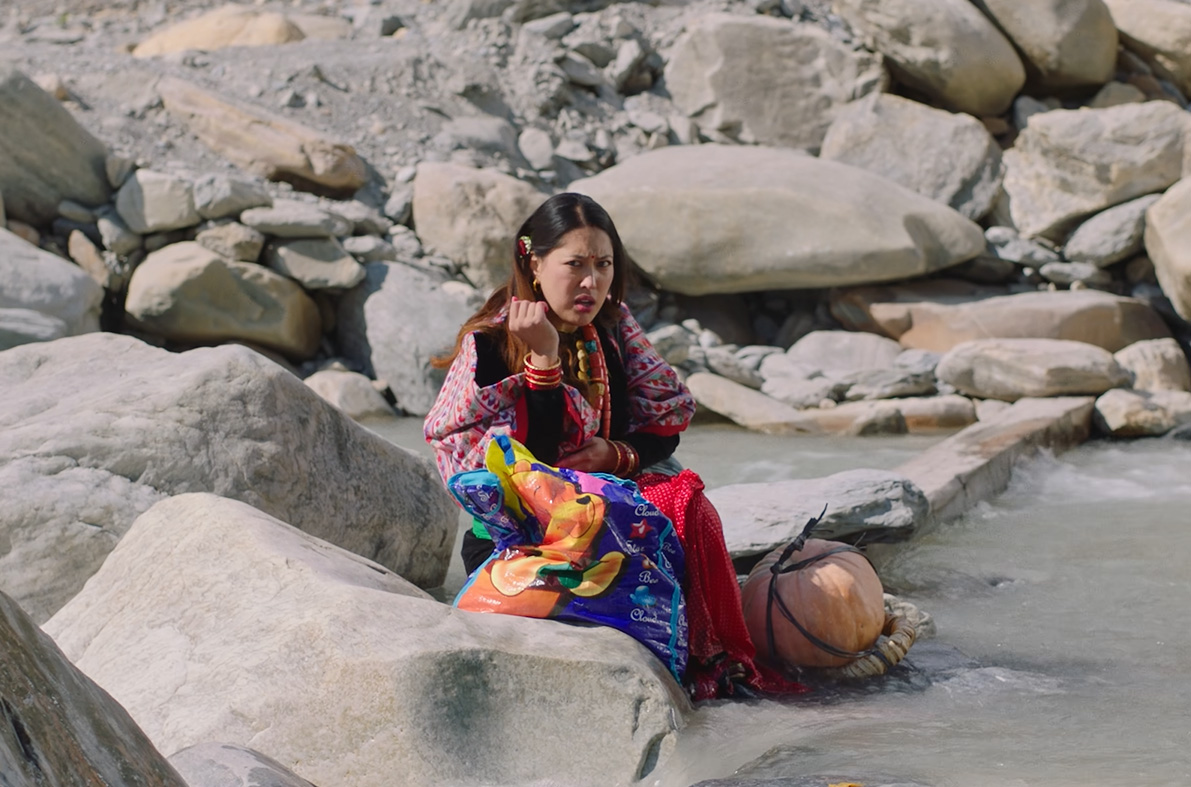
It is in this situation that he unexpectedly encounters Maiya (Rishma Gurung), his first love. Her return marks the beginning of the film’s second act. Maiya is now caught in a difficult situation and needs support.
Kaji consequently faces two challenges at once. Bound by both moral obligations and circumstances, he must find a way to protect his marriage while securing the investment needed for his business. At the same time, he wants to help his first love unconditionally.
How does Kaji navigate these competing responsibilities? That is something audiences will have to discover by watching the film.
Kaji’s changing identity
Overall, the fifth installment portrays what has happened to the familiar characters over the previous four years.
Kaji remains unsettled in his personal life and feels increasingly lonely inside. This time, he is searching for an identity of his own. He wants to become self-employed by embracing entrepreneurship.
B.K. and Chhantyal want to leave the country. A new character, Shanti (Sirjana Gurung), enters Kaji’s life, while Maiya returns without having resolved the problems in her own life.
The final part of the film also hints at where the Kabaddi franchise might go next. Its closed ending offers a clue about the direction of the series.
Rambabu Gurung’s distinctive cinematic language
Even in its fifth installment, director Rambabu Gurung retains his artistic signature.
Looking at his work on Kabaddi solely as an example of social comedy would mean overlooking part of its artistic character. Gurung’s distinctive approach lies in bringing local life, familiar human weaknesses, ensemble performances and situational humour together within a cohesive cinematic world.
He sustains that approach in the fifth film. This time, he is also involved as a screenplay writer, and his creative personality is evident in the writing. The screenplay appears mindful of the risk of simply repeating the style of the previous installments.

Kaji, in particular, appears more mature. His contradictory persona becomes one of the film’s important elements. This time, he draws a line between love and marriage and takes a stand in favour of marriage.
It is a significant transformation in the character’s arc. The friendship among the characters played by Dayahang Rai, Buddhi Tamang and Bijay Baral remains one of the film’s most engaging aspects.
Performances, sound and visual craft
Debut actor Sirjana Gurung delivers a commendable performance. She establishes her presence from her first film, making an impression not only in the first act but also in the second.
Bipin Karki plays a character who travels to Mustang to recover a debt. His character, marked by a distinctly tough persona, adds an interesting dimension to the film.
The characters are all shades of grey. Their weaknesses can frustrate audiences, yet those same flaws also invite sympathy. This moral complexity helps make them feel recognisably human.
The sound design is another strength. The creation of sounds that establish and reinforce the film’s mood stands out as one of the fifth installment’s best features.
The cinematography, costumes and editing are also impressive. The song ‘Thak Khola…’ is not merely a well-composed musical piece; it also touches the emotional core of the film.
Verdict: A sequel that preserves the franchise’s soul
If you have followed the ‘Kabaddi’ franchise faithfully, the fifth installment is one you should not miss. Those encountering the series for the first time are also unlikely to be disappointed.
The film sustains the distinctive qualities and aesthetic appeal of its predecessors, returning audiences to a familiar world while allowing its characters to move forward.
That continuity is what makes ‘Kabaddi 5’ an honest sequel.








Comments
Share your opinion or feedback. Please keep comments respectful and constructive.