


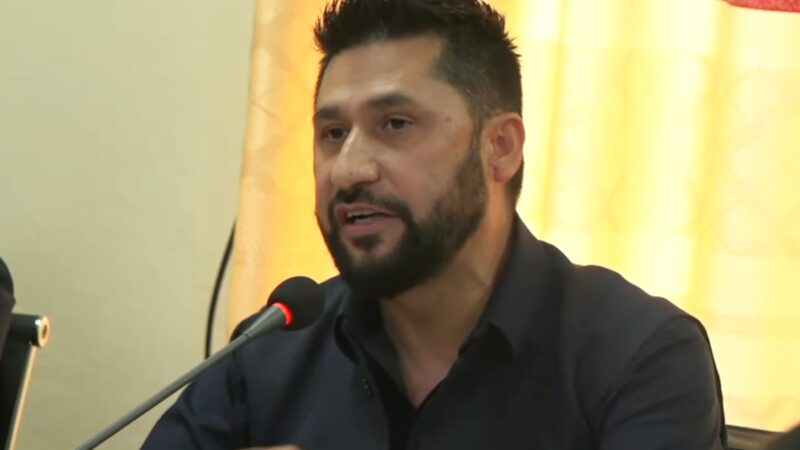
KATHMANDU – Rastriya Swatantra Party (RSP) Chairman Rabi Lamichhane has described reports that the chief commissioner of the Commission for the Investigation of Abuse of Authority (CIAA) received death threats and was detained at the Prime Minister’s Office as a serious matter.
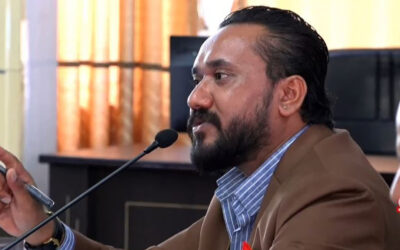
Lamichhane raised the issue during a meeting of the House of Representatives’ State Affairs and Good Governance Committee while discussing the mental conditions under which CIAA officials are working.
“I want to raise a serious issue here. This is not about the individual Prem Rai; this is about the chief commissioner of the Commission for the Investigation of Abuse of Authority,” Lamichhane said. “It is an extremely serious matter for a serving chief commissioner to receive death threats and for financial transactions related to that to have also been proven.”
He questioned how impartial decisions could be made when officials were forced to work under such mental torture and at “gunpoint.”
“There have also been reports that he was detained at the Prime Minister’s Office. How do we end an environment where one’s very life is at risk?” Lamichhane asked at the parliamentary committee.
During the committee discussion, CIAA chief Rai provided information about discussions held at the Prime Minister’s Office regarding the passport case.
Reports had emerged that they were kept at the Prime Minister’s Office for seven hours and subjected to pressure before proceeding with the passport contract case.
During the committee discussion, Lamichhane said the CIAA was not a shadow of the government and urged it not to work out of affection for the government.
“As chairman of the ruling party, I can say clearly that the CIAA is neither a shadow of the government, nor does the government need to keep it out of affection,” Lamichhane said. “Make history; we have no requests or prejudices.”
He pledged that there would be no political interference in the exercise of powers granted by law to maintain good governance.
“The current CIAA leadership came through the constitutional process during the tenure of previous governments. So work without obstruction,” Lamichhane said.
What Is a ‘Policy Decision’?
Lamichhane said the definition of a “policy decision” should be clarified in the context of empowering the commission.
“Policy decisions are necessary. Otherwise, how will the Cabinet function? How will the prime minister work?” Lamichhane said. “If everyone becomes afraid to make decisions, who will work for good governance, development and prosperity?”
“If something is misinterpreted as a policy decision, decisions may not be made at all in the future and the country will become hostage to indecision. The law itself should determine which matters fall under policy decisions and whether the CIAA should investigate them,” he said.
Lamichhane said the economy was currently struggling and had lost confidence, and questioned whether the CIAA would be able to handle the “load” if the powers of all agencies were concentrated in a single institution.
“There are other agencies, including Nepal Rastra Bank, to deal with financial crimes; they should be allowed to do their work,” Lamichhane said.
“The private sector provides employment to eight or nine out of every 10 people in the country. If the CIAA also wields the stick against a private sector that is already frightened and hesitant to invest, what will the consequences be? We need to think seriously about this issue before clearly defining it in law,” he said.



Comments
Share your opinion or feedback. Please keep comments respectful and constructive.