


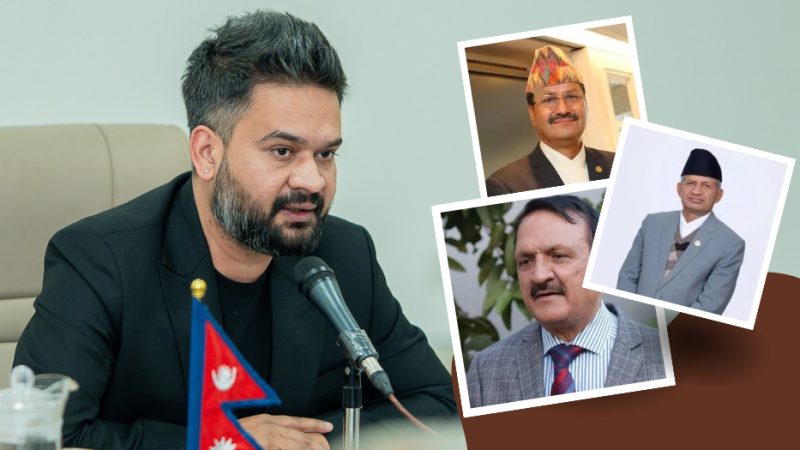
KATHMANDU (NNB)- Former foreign ministers have urged Prime Minister Balendra Shah (Balen) to put Nepal’s national interests at the centre of his upcoming visit to India and engage with the Indian side with confidence.
Speaking to Nepal News Bank, they called on Balen to activate diplomatic mechanisms to address longstanding issues between the two countries, strengthen mutual trust and explore new opportunities for economic partnership.
Balen is scheduled to visit India for two days on November 22 and 23. Ahead of the visit, former foreign ministers said he should prioritise various aspects of Nepal-India relations, longstanding unresolved issues and opportunities for economic development.
Former foreign minister and Nepali Congress leader Dr Prakash Sharan Mahat said the visit should serve as an opportunity to strengthen trust between the two countries.
Describing India as Nepal’s close neighbour with deeply interconnected ties, Mahat said the visit was a positive step.
“India is our neighbour and a country with which we have extremely close ties. It is a good thing for the prime minister to visit. My wish is that this visit builds trust between the two countries and makes an effort to address the concerns and interests of both sides in a comprehensive manner,” he told Nepal News Bank.
Mahat said national interests should be the foremost consideration in conducting foreign relations. He added that diplomatic engagement should also take into account the interests and concerns of the other country.
He stressed that making speeches about national interests at home would not produce meaningful results. Nepal must present its positions with facts, arguments and evidence at the relevant diplomatic forums, he said.
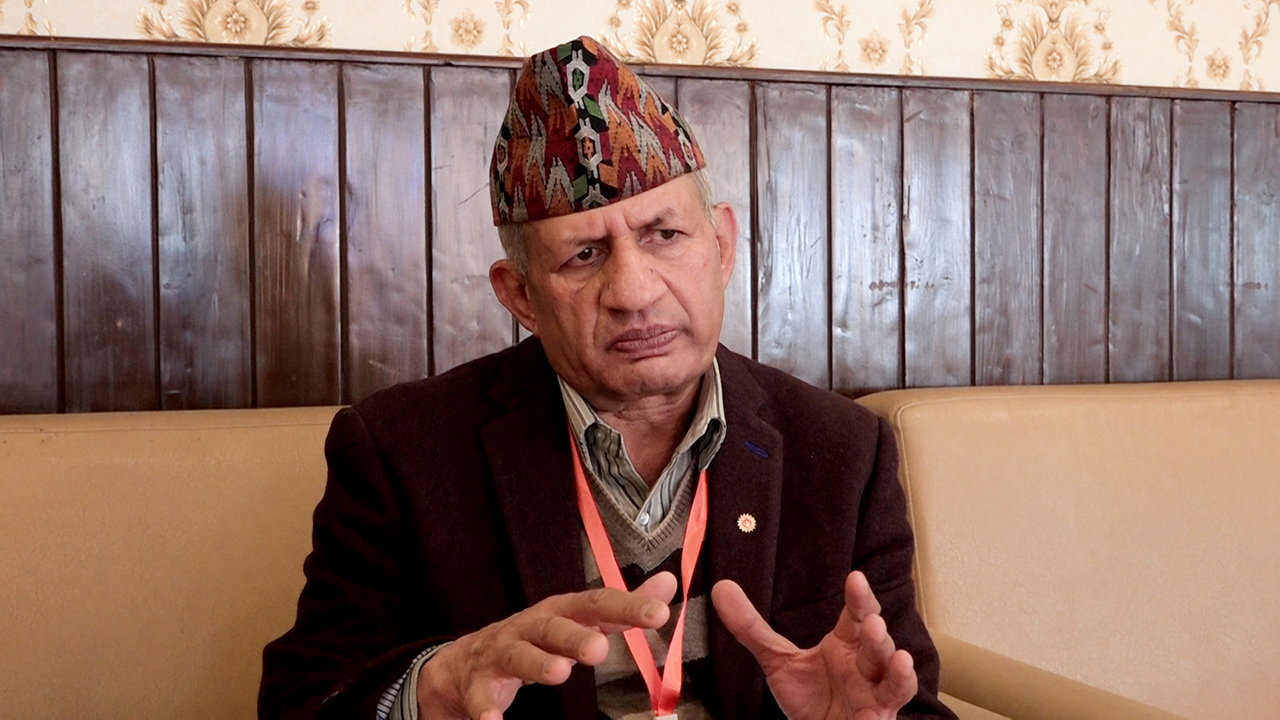
“Making big speeches and saying big things within the country serves no purpose. We must be able to present our arguments with evidence and a sound basis at the appropriate forums,” Mahat added.
Similarly, former foreign minister and Nepali Congress leader Narayan Prakash (NP) Saud said the prime minister’s visit was important and natural given the multidimensional relationship between Nepal and India.
According to Saud, the two countries share longstanding economic, social, cultural and traditional ties. However, he noted that various issues frequently arise between close neighbours, making established processes and mechanisms necessary to resolve them.
“Considering our multidimensional relationship, which encompasses economic, social, cultural and traditional ties, such a visit is important in itself and is also natural,” Saud said.
He said Nepal and India had several longstanding issues as well as matters with immediate implications, which should be addressed through dialogue and negotiations.
Saud called for diplomatic mechanisms and a formal dialogue process between the two countries to resolve issues that have remained unsettled for years, including border disputes.
Former foreign minister and CPN-UML leader Pradeep Gyawali said Balen should meet his Indian counterpart carrying the message that the entire nation stands behind him.
He argued that the tradition of building national consensus before important foreign visits should continue. This includes consultations with former prime ministers, former foreign ministers, political party leaders and experts.
“Prime Minister, when you speak with your Indian counterpart, you should be able to convey the message that the entire nation stands behind you. There has been a longstanding tradition of seeking suggestions from former prime ministers, former foreign ministers, leaders of different political parties and experts ahead of important visits, with the aim of building national consensus on the agenda. The prime minister should continue this good practice and go to the negotiating table with the strength of that consensus,” Gyawali said.
He said a national consensus would give the prime minister greater strength in negotiations.
However, Gyawali expressed doubts about whether consultations with all sides would take place, citing what he described as the working style of the current prime minister and the Rastriya Swatantra Party.
He also urged Balen to approach talks with India confidently, without any sense of inferiority, as the representative of a sovereign nation.
“Our appeal is that you present yourself before the Indian prime minister with confidence. Countries may be large or small in terms of geographical size, population or the scale of their economies. But when they sit at the negotiating table, the participants are prime ministers of two sovereign nations. There should be no sense of inferiority. It is essential to engage with firm confidence,” he said.
Gyawali said Nepal-India relations could not be strengthened by concealing or avoiding existing problems. He urged Balen to raise issues such as the border dispute openly and activate diplomatic mechanisms already established to address them.
According to Gyawali, the two countries had decided in 2014 to establish a mechanism involving their foreign secretaries to address border issues.
He also pointed to longstanding discussions about amending certain provisions of the 1950 Nepal-India Treaty of Peace and Friendship and reviewing the trade treaty between the two countries.
Gyawali said mechanisms established to address these matters should be activated and the process of finding solutions taken forward.
He further argued that the prime minister’s visit should not focus solely on past disputes and problems. It should also prioritise ways to build a stronger economic partnership between Nepal and India in the future.
He said the lack of progress on the Pancheshwar Project over three decades should be raised during the visit. He also cited insufficient progress on hydropower projects including West Seti, Upper Karnali, Pocket Karnali and Lower Arun.
The former foreign ministers’ suggestions broadly highlight several priorities for the visit: diplomatic engagement based on national interests, activation of mechanisms to resolve outstanding disputes, national consensus and exploration of new opportunities for economic partnership between Nepal and India.


Comments
Share your opinion or feedback. Please keep comments respectful and constructive.