


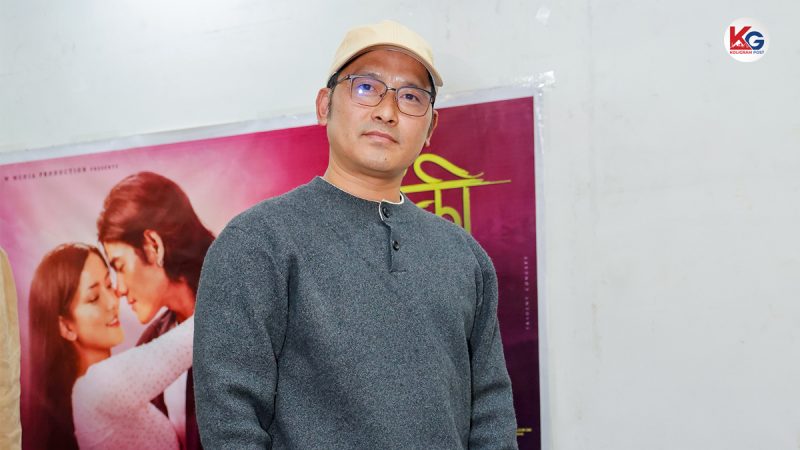
KATHMANDU: Director Ashok Thapa Magar has emerged as one of the names attracting attention in Nepali cinema in recent years. He entered filmmaking through the documentary ‘Korean Dream’. His first feature film, ‘Khushma’, became a major commercial success, bringing him both recognition and financial rewards. He is now preparing to reach audiences with his upcoming film ‘Jalaki’.
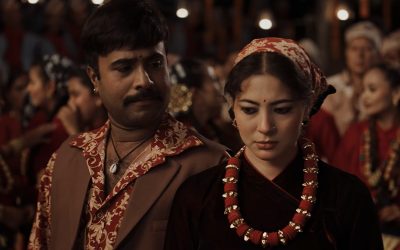
Set against the backdrop of Magar culture, Thapa tells emotionally engaging stories rooted in social realities. In Jalaki, he weaves together themes of love, foreign employment, culture and family. The film is scheduled for release on Mangsir 4.
Here are excerpts from a conversation with the director.
What is the meaning, context and message of Jalaki?
In the Magar community, a stone pillar is regarded as a symbol of someone’s memory, identity and faith. One of the storylines in our film is connected to sheep herding.
There are three different language groups within the Magar community. The film draws on the context of communities that speak the Dhut and Kham languages. The tradition of sheep herding is found among Kham-speaking communities, particularly in Rukum and Rolpa. In the Gandaki region, meanwhile, many people speak the Dhut language.
The idea behind the film came from a desire to tell a love story set against the backdrop of Magar culture. We have drawn on incidents from society. We have created a love story based on the experiences of women who migrate to South Korea on domestic worker visas.
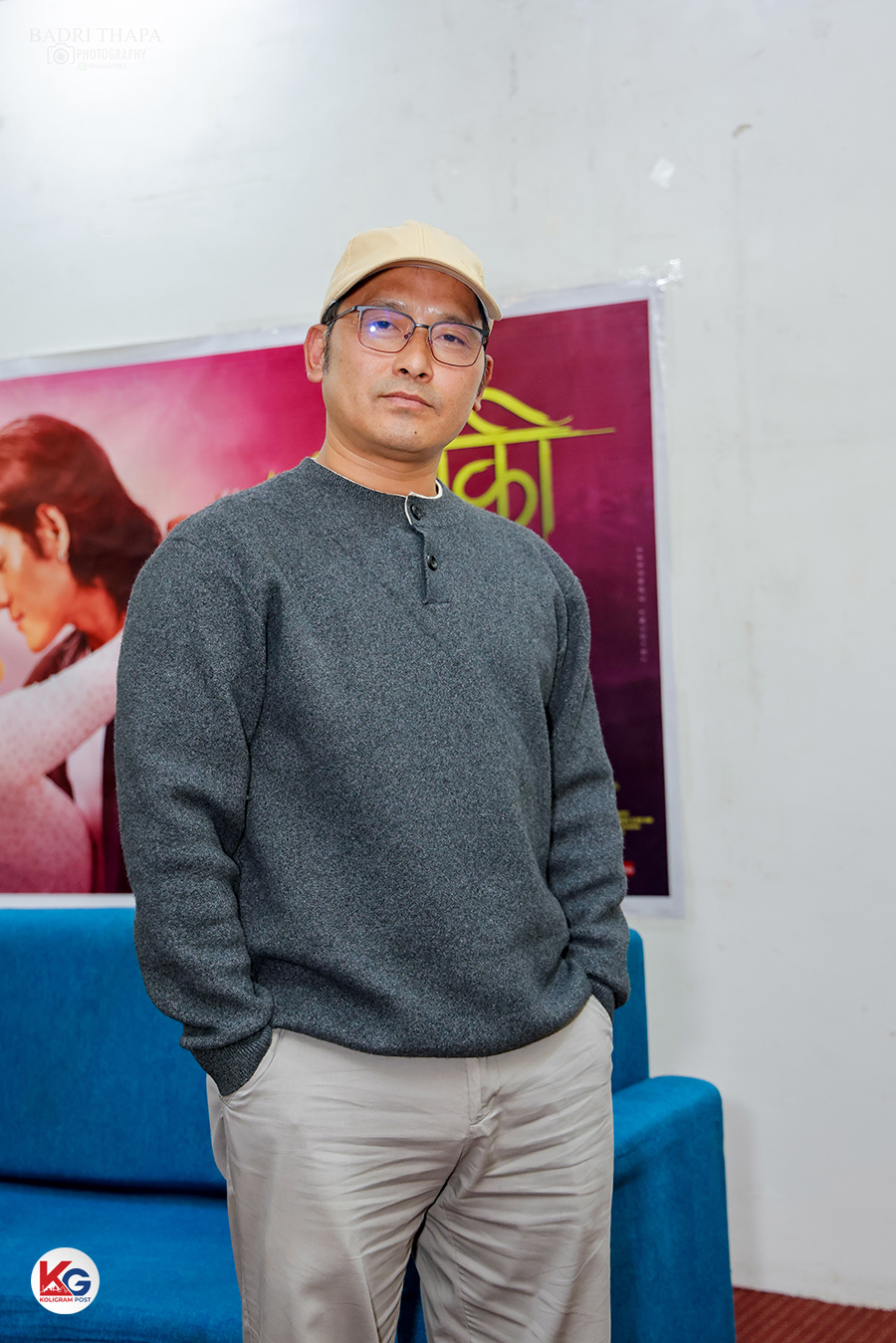
You are making films about stories from the Magar community. Have your personal experiences also influenced them?
Although I am Magar, I grew up among the Brahmin community in Butwal. After returning from South Korea, the films I watched and saw around me were largely influenced by Indian filmmaking styles. They did not reflect our culture, although they often featured Indian-style songs.
I felt that Nepal has such great ethnic and cultural diversity, with people from different communities living together and showing mutual respect. From the perspective of representing Nepal through cinema, I believe this cultural diversity is one of our greatest assets. That made me think we should make films that incorporate our own cultures.
It does not mean that every film should be about the Magar community or that filmmakers must always make such films. Perhaps I will make films about other communities in the future as well. But I feel that our films should have a distinct identity of their own. It should reflect the colours of our soil, geography and culture.
How can audiences from outside the Magar community connect with Jalaki?
Although the film draws on Magar culture, it is not just a Magar film. It is a Nepali film.
When you set a story in a particular place, geography and tradition, its distinct cultural identity naturally becomes part of the film. If we shoot in Myagdi, the setting will reflect the Magar community there. When we talk about Rolpa and Rukum, we are referring to places where a large number of Magar people live. We have presented the story in line with the geography and culture of the locations we chose.
There are good relationships among different communities in our society. People wear one another’s traditional clothes and dance together. We adopt each other’s cultures and traditions. Politics tries to divide people, but culture brings them together. We have tried to connect people through culture. In some ways, we have also brought Gurung and Magar cultures together. I believe audiences from outside the Magar community will also appreciate the film.
After Khushma, you have again chosen a cultural setting for Jalaki. Why have you not explored other genres and styles?
Jalaki is somewhat different from Khushma. We chose Rukum and Rolpa for Khushma because we wanted to tell a story about the armed conflict. Those districts were among the areas most affected by the conflict, and the Magar community was particularly affected. I made the film based on the story of that community.
Perhaps this is also because I am Magar. If I were Gurung, I might still have made Khushma, but perhaps I would have told a story about the Gurung community. Ultimately, the story itself guides the filmmaker.
We chose Rolpa for Jalaki because it tells the story of sheep herders. The film covers only a limited part of Rolpa. We have told a story set in the Gandaki region 20 years ago.
The visual quality of Jalaki is different from that of Khushma. Its cinematography and performances are stronger. Although both films have stories at their core, their presentation is different. None of us is untouched by foreign employment, and that experience is also part of this film.
Why should audiences watch Jalaki?
It is an emotional love story. Audiences will also find nostalgia for college life. The film features a love story connecting four people. Through it, we also try to convey a message.
A woman who suffers domestic violence and is forced to return to Nepal from abroad while pregnant may not be accepted by her own husband or society. Where can she go in such circumstances? Where does she belong? How does such a situation affect the psychology of an innocent child?
The film also tells the story of a woman whose life is shaped by these challenges. Jalaki has many more dimensions than Khushma.
When telling stories, which medium do you prefer: feature films or documentaries?
It took me eight years to make the documentary Korean Dream. It also won international awards. Making documentaries is very difficult. You have to work from the foundation of reality. Sometimes, you have to find a story even in something that does not appear to have one.
In feature films, however, we have much more freedom. There is depth, and we have the freedom to decide how far we want to explore it. We can use our imagination.
With documentaries, there are times when it may not be possible to tell a story as effectively as in a feature film. The feature film format can make storytelling much easier.



Comments
Share your opinion or feedback. Please keep comments respectful and constructive.