


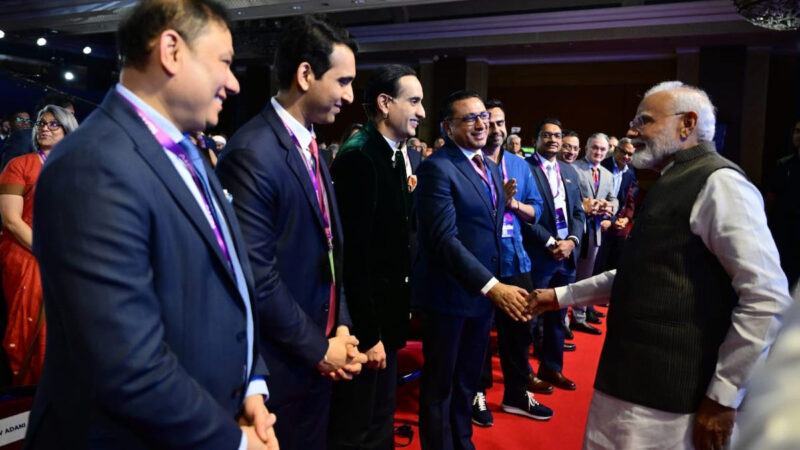
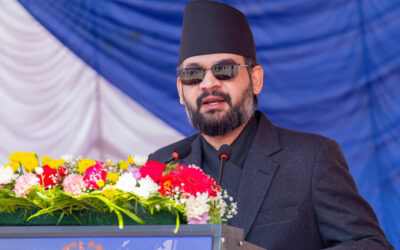
NEW DELHI – Finance Minister Swarnim Wagle has said the time for linking anti-India sentiment with Nepali nationalism is over.
Wagle, who is on a visit to India, spoke on Friday at the “NDTV World Summit 2026” in New Delhi. He said the government led by Prime Minister Balen Shah wants good relations with India.
According to NDTV, in a special session on Nepal-India relations on Friday, Wagle said that although problems appear from time to time in relations between the two countries, they are deeply bound by geographic and social closeness.
He also said Prime Minister Shah will visit India soon. The summit was organised by Indian media outlet NDTV on Thursday and Friday.
Wagle spoke in a session titled “Proximity to Prosperity: The India-Nepal Opportunity,” which focused on how to turn Nepal-India closeness into an opportunity for economic prosperity.
At the summit, he questioned the situation in which countries like Nepal must take loans to rebuild after damage caused by climate change.
According to an excerpt of his remarks released by NDTV, Wagle said Nepal’s contribution to creating the climate crisis is extremely small, yet the financial burden of rebuilding the infrastructure it has destroyed falls on Nepal.
He asked why Nepal should have to borrow to rebuild bridges, roads, hydropower projects that generate clean energy and homes damaged by floods. He stressed that the issue should be raised in international discussions.
Wagle praised India’s immediate assistance after major disasters in Nepal.
Recalling that Indian aid reached Kathmandu within hours of the 2072 BS earthquake, he said immediate help was received from India after the latest floods as well. He said Indian Prime Minister Narendra Modi telephoned Prime Minister Shah after the floods and committed to providing assistance.
He said India had also shown readiness to provide necessary support in government-level dialogue, and that such support has further strengthened ties between the two countries.
Wagle also spoke at the summit about Nepal’s Gen Z movement and the political expectations of the younger generation.
He said a generation that has grown up with smartphones and social media is not ready to accept the status quo. In his analysis, digital technology is changing the nature of political participation, public expectations and social movements.
He also stressed that, to make the impact of the youth movement long-lasting, anger on the streets must be linked with democratic institutions. Presenting Nepal’s experience as an example of political change, he said the demands raised by the movement should be taken into institutional processes.
Earlier, on Thursday, Wagle put a question to Indian External Affairs Minister S. Jaishankar, the keynote speaker at a session, about changing international cooperation. He asked whether there is a growing trend of cooperation through small, flexible groupings of countries with shared interests, instead of traditional multilateral institutions.
Indian Prime Minister Narendra Modi also addressed the NDTV event. Modi and Wagle met on that occasion.


Comments
Share your opinion or feedback. Please keep comments respectful and constructive.